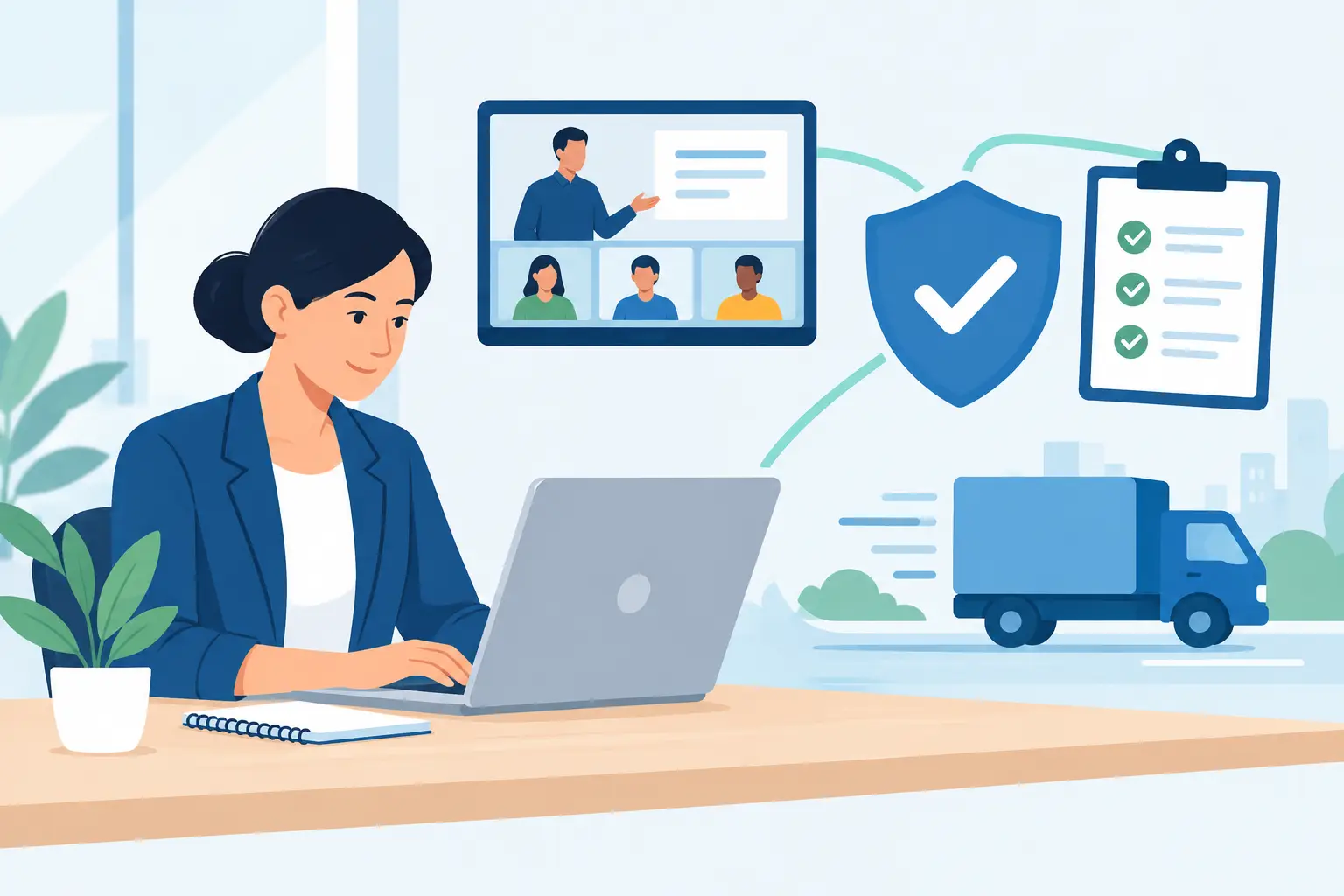
A training initiative can be urgent without being exempt from scrutiny. When a product launch, regulatory change, or workforce transformation needs learning support now, the pressure to hire fast is real. But training vendor compliance is not a procurement formality to handle after the statement of work is signed. It is the operating discipline that lets L&D move quickly while protecting employee data, intellectual property, budgets, and business credibility.
The problem is rarely that leaders ignore compliance. More often, the process is fragmented. L&D evaluates instructional quality. Procurement checks commercial terms. Legal reviews privacy language. InfoSec assesses systems. Finance manages payment setup. By the time every function has weighed in, the program timeline has slipped and the specialist you wanted is no longer available.
The answer is not to lower the bar. It is to define the bar before the urgent request arrives, then apply it consistently based on the actual risk of the engagement.
What training vendor compliance should cover
Training vendors are not all exposed to the same risks. A facilitator delivering a live leadership workshop to 20 managers has a different compliance profile than an eLearning development team accessing employee records, publishing content in your LMS, and working with a third-party authoring platform.
A practical compliance model starts by separating baseline requirements from engagement-specific requirements. Baseline requirements establish whether a provider is legitimate, qualified, and commercially ready to work with your organization. Engagement-specific requirements reflect what the provider will access, create, process, or represent.
At minimum, your review should address four areas:
- Business and workforce eligibility: entity verification, tax documentation, insurance where required, sanctions screening, worker classification, and any applicable supplier diversity documentation.
- Capability and quality: relevant enterprise experience, portfolios, references, methodology knowledge, facilitator credentials, accessibility expertise, and evidence that the vendor can deliver at the required scale.
- Data, security, and privacy: access to employee or learner data, personal information, LMS credentials, storage locations, subcontractor use, incident reporting, and data deletion requirements.
- Contractual and delivery controls: scope, acceptance criteria, intellectual property ownership, confidentiality, payment terms, indemnification, accessibility commitments, and change-control procedures.
This is not a case for treating every independent consultant like a software company. Requiring a one-person instructional designer who never touches personal data to complete a months-long security assessment is wasteful. At the same time, assuming a small provider presents no risk because they are small is equally weak. The right depth of diligence depends on access, impact, and duration.
Build a risk-tiered training vendor compliance process
A tiered approach gives procurement, legal, LearnOps, and program owners a common language for deciding what happens next. It prevents two common failures: over-reviewing low-risk work and under-reviewing high-risk work.
Tier 1: Low-risk expertise and facilitation
This tier typically includes facilitators, coaches, learning strategists, or subject matter experts who deliver services without accessing systems or receiving identifiable employee data. They may review existing materials, lead workshops, or advise internal teams.
The review can usually focus on business eligibility, relevant experience, confidentiality, scope, payment terms, and intellectual property provisions. If the consultant uses their own materials, clarify what is licensed versus what your organization will own. That question is easy to overlook and expensive to resolve later.
Tier 2: Content creation and controlled system access
This tier includes instructional designers, eLearning developers, LMS administrators, and learning operations specialists who need access to internal content libraries, brand assets, non-public business information, or limited LMS environments.
Add controls for access provisioning, least-privilege permissions, approved file-sharing methods, accessibility standards, source-file ownership, and offboarding. If the vendor is developing SCORM or xAPI content, define the technical acceptance criteria before development begins. A finished course that cannot report correctly in your LMS is not a finished course.
Tier 3: Sensitive data, integrations, or enterprise platforms
This tier applies when a vendor handles personally identifiable information, connects to HRIS, LMS, or talent systems, processes assessments, uses AI-enabled tools with sensitive inputs, or manages a large program on your behalf.
This is where formal privacy and security reviews matter. Confirm data flows, subprocessors, security obligations, breach notification requirements, retention periods, and the location of hosted data. If AI is involved, ask direct questions about whether prompts, files, or learner outputs are retained or used to train external models. “We use AI” is not an adequate answer for a compliance review.
Define ownership before the first draft
Learning teams frequently discover intellectual property issues at handoff. A vendor has built polished content, but the organization only owns a published output, not the editable source files. Or a consultant has incorporated stock assets with licensing restrictions that limit future reuse.
Your agreement should distinguish among work made specifically for your organization, the vendor’s pre-existing materials, third-party assets, and platform-generated outputs. For custom work, require editable source files and identify the required formats. For eLearning, that might mean authoring-tool files, design files, narration scripts, transcripts, and media licenses. For instructor-led training, it might include facilitator guides, participant workbooks, slide decks, and train-the-trainer materials.
Accessibility deserves the same clarity. If your organization requires WCAG alignment, captions, transcripts, keyboard navigation, or screen-reader testing, place those requirements in the scope and acceptance process. Do not leave accessibility as a broad aspiration that gets interpreted differently by each supplier.
Make compliance part of vendor selection, not a late-stage obstacle
The fastest sourcing process begins with a brief that tells vendors what must be true to win the work. State the required experience, deliverables, timeline, systems involved, data exposure, accessibility expectations, and review path upfront. Qualified providers can then respond accurately, while providers who cannot meet the requirements self-select out early.
This also improves proposal quality. Instead of comparing vague promises, you can evaluate candidates against operating realities: Have they delivered regulated training? Can they work within your LMS and content standards? Have they supported global audiences? Can they provide source files and follow your brand, privacy, and accessibility rules?
For urgent projects, keep a pre-vetted bench of specialists by role and risk tier. Learnexus, for example, gives organizations direct access to experienced L&D, HR, and Talent consultants whose portfolios and enterprise experience have already been validated. That does not replace your internal legal, security, or procurement obligations. It reduces the time spent finding credible expertise before those workflows begin.
Set controls that work after onboarding
Compliance does not end when a purchase order is issued. The highest-risk failures often happen during delivery: a shared folder gets opened too broadly, a subcontractor joins without approval, a project lead stores files in a personal workspace, or a final deliverable is accepted without confirming technical requirements.
Assign one internal engagement owner with authority to coordinate the vendor, project team, procurement, and any control functions. That person should know what access was approved, what data may be shared, who can approve changes, and what completion looks like.
For longer engagements, use lightweight check-ins. Confirm that access remains appropriate, deliverables are meeting acceptance criteria, and the scope has not quietly expanded into a higher-risk category. A facilitator who begins by leading workshops may later be asked to analyze engagement survey data. That is a material change in the engagement, not a casual extension of the original scope.
Offboarding should be equally deliberate. Remove system access, collect final source files, verify data return or deletion, close outstanding licenses, and document acceptance. If the vendor has helped build an ongoing academy or capability program, make sure internal owners can maintain it before the engagement ends.
Measure the process, not just the paperwork
A compliant process that takes 12 weeks to approve a low-risk facilitator is not protecting the business well. It is encouraging workarounds. Track cycle time from request to kickoff by risk tier, the percentage of vendors cleared without rework, recurring review issues, and the number of projects delayed by late requirements.
Those measures reveal where to improve. If security reviews are repeatedly triggered because teams do not know whether a tool stores learner data, create a short intake question set. If contracts stall over intellectual property, standardize the language for custom learning assets. If program managers repeatedly engage vendors before procurement is involved, make the approved path faster than the unofficial one.
The goal is not zero friction. It is productive friction in the places where risk is real, and speed everywhere else. When your requirements are clear, your vendor bench is credible, and ownership is defined from intake through offboarding, compliance becomes a reason projects launch with confidence rather than a reason they wait.