An urgent LMS migration, leadership program redesign, HRIS rollout, or workforce planning initiative can lose momentum before work even begins. The problem is rarely a lack of budget or executive support. It is the operational drag between identifying the expertise needed and getting the right consultant under contract, oriented, and producing.
Consultant management software is designed to remove that drag. For L&D, HR, and Talent leaders, it creates a controlled way to source specialized external expertise, manage engagements, monitor spend, and retain institutional knowledge without treating every project like a new procurement event.
The difference matters when your organization needs an instructional designer with regulated-industry experience, a compensation specialist who knows your market, or an HRIS implementation advisor who has handled your specific platform. A generic freelancer database cannot reliably solve that problem. Neither can a six-week agency search process.
What Consultant Management Software Actually Does
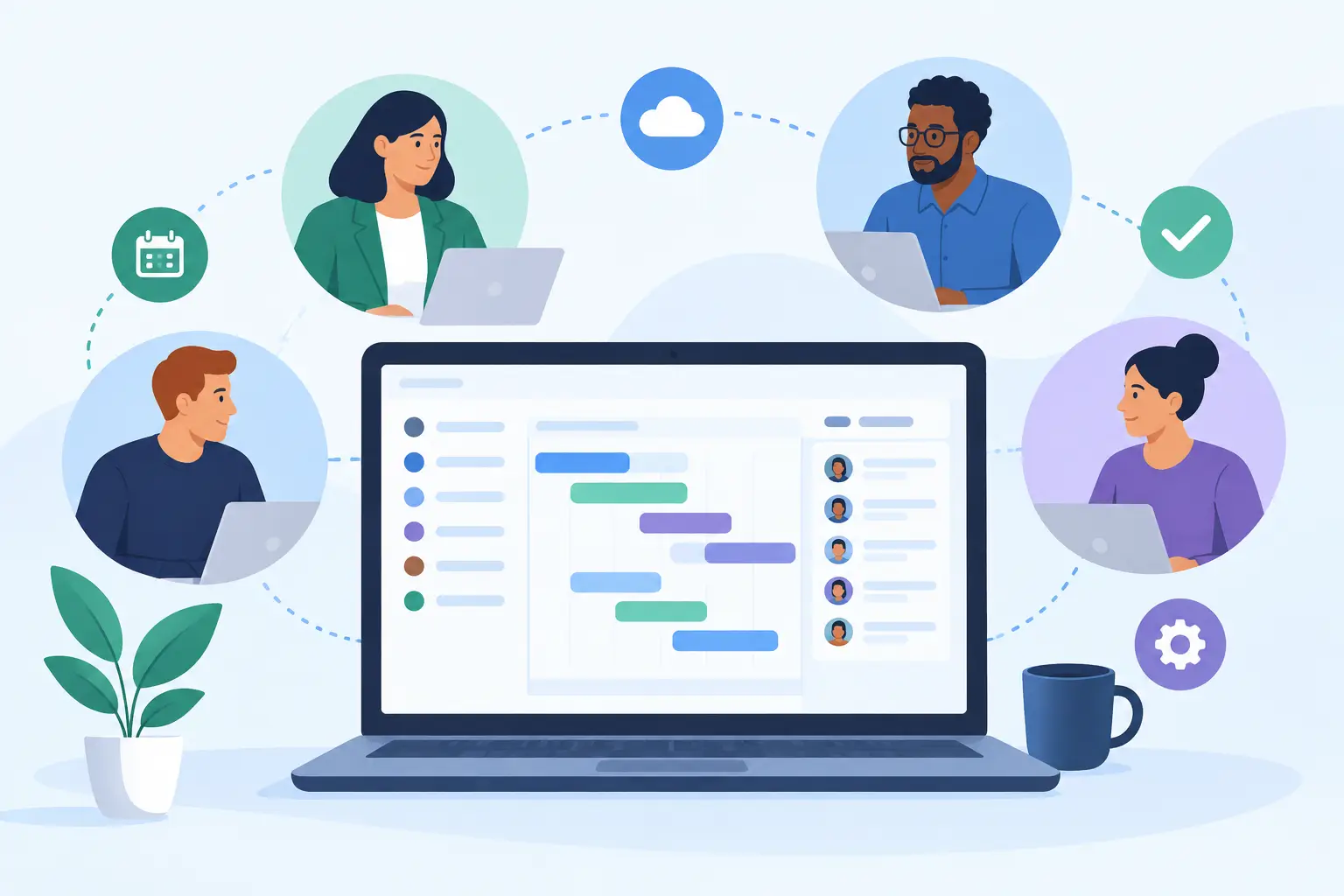
Consultant management software is the operating layer for an organization’s external expert workforce. It brings the work that often lives across email threads, spreadsheets, procurement systems, shared drives, and disconnected project plans into a more accountable workflow.
At a minimum, the software should help teams define requirements, find and evaluate qualified consultants, manage approvals and contracts, track project milestones, and maintain a record of outcomes. More mature programs also use it to build a reusable bench of proven specialists by skill, industry, tool, geography, rate, and prior performance.
This is not simply vendor management software with a new label. Traditional VMS platforms are often built for high-volume contingent labor, staffing suppliers, and timekeeping. They can be useful for broad workforce administration, but they may be too rigid for a focused consulting engagement where methodology, domain credibility, and project fit matter more than hourly labor volume.
For workforce enablement leaders, the core question is more practical: can the system help us get the right expert working quickly while preserving procurement discipline, security, and budget visibility?
Why L&D, HR, and Talent Teams Need a Different Workflow
External consulting work is often specialized, time-bound, and outcome-based. An eLearning developer may need to create a compliance curriculum within eight weeks. An OD consultant may be brought in to support a reorganization. A talent strategist may need to build a succession framework before the annual planning cycle closes.
Each assignment calls for a different evaluation standard. A resume and rate card do not tell you whether a consultant can facilitate executive alignment, configure an LMS, create a valid skills architecture, or manage change across a distributed workforce. The workflow must make expertise visible early, before the organization spends time on interviews, legal review, and stakeholder meetings.
That is why the best platforms support structured project briefs and specialized matching. They let leaders specify the business outcome, technical environment, audience, timeline, delivery model, and required experience. They also make it easier to compare candidates based on relevant portfolio evidence rather than generic titles.
What this means for you: fewer conversations with consultants who look qualified on paper but cannot execute in your environment. For a lean LearnOps or HR operations team, that can be the difference between launching a project this quarter and deferring it again.
The Capabilities That Matter Most
Not every organization needs an expansive external workforce platform. If you engage one consultant a year, a disciplined procurement process and a shared project plan may be enough. But when projects recur across L&D, HR, and Talent, manual coordination becomes an expensive habit.
Look for consultant management software that addresses these four operational needs:
- Specialized sourcing and qualification. The platform should help users find expertise at the level of role, methodology, industry, and technology. “Learning consultant” is not specific enough when you need someone who has built scenario-based training for a new CRM rollout or led a global LMS implementation.
- Fast, controlled engagement setup. Intake, approvals, statements of work, confidentiality requirements, and contracting should move in a clear sequence. Speed without controls creates risk. Controls without speed cause business teams to work around the system.
- Project and outcome visibility. Leaders need more than a start date and invoice status. They need visibility into deliverables, decision points, stakeholder responsibilities, risks, and acceptance criteria.
- A durable talent record. After the engagement, the organization should retain what it learned: what the consultant delivered, which teams they supported, how they performed, and when to bring them back.
The fourth capability is routinely overlooked. Every successful external engagement should make the next one easier. If a consultant delivered an excellent manager enablement program, your team should not have to rediscover them through an agency or a broad marketplace 18 months later.
The Real Value Is Faster Decisions, Not More Administration
Poorly designed systems add another intake form and another approval queue. Effective consultant management software reduces decision friction.
A strong process gives stakeholders enough information to make confident decisions early: the project scope, expected outcome, consultant credentials, commercial terms, and delivery plan. Procurement gains documentation and spend visibility. Business leaders gain speed. Finance gains a clearer view of planned versus actual external spend. The consultant gains a direct understanding of who owns decisions and how success will be measured.
This balance is especially valuable for fractional and project-based work. A fractional HR leader may support a company for six months, while an AI learning specialist may be needed for a focused three-week design sprint. The engagement model changes, but the organization still needs a consistent way to evaluate fit, establish scope, and govern delivery.
The right platform should accommodate both without forcing every project into the same template.
Where Technology Alone Falls Short
Software cannot compensate for an undifferentiated talent supply. A beautifully organized platform still produces weak outcomes if the available consultants are junior, unverified, or mismatched to enterprise complexity.
This is the trade-off many organizations discover after adopting an open marketplace. Broad choice can appear attractive, but it shifts the burden of qualification onto internal leaders. Your L&D director becomes the recruiter. Your HR operations team becomes the reference-checking function. Your project sponsor spends hours sorting through proposals that do not reflect the brief.
For high-stakes work, the stronger model combines workflow technology with a rigorously vetted network of specialists. Learnexus, for example, connects organizations with independent L&D, HR, and Talent consultants who have deep enterprise experience, while supporting the path from specialized search and video-first proposals through contracting and project delivery.
What this means for you: the system should not merely organize a search. It should improve the quality of the options entering that search.
How to Evaluate Consultant Management Software
Start with the work you need to accelerate, not a generic feature checklist. If your immediate priority is an HR transformation, assess how the system handles complex scopes, senior stakeholders, security requirements, and milestone-based deliverables. If you are building a flexible L&D bench, prioritize skill-level search, repeat engagement history, and access to proven instructional design and learning technology talent.
Then test the workflow against a real project. Ask how long it takes to move from a written brief to qualified options. Ask whether project sponsors can see evidence of relevant work. Ask how contracting responsibilities are divided between procurement, legal, and the business owner. Ask whether you can compare spend and outcomes across engagements without creating a separate reporting process.
Also examine adoption risk. The best process is the one leaders will use when the pressure is high. If a platform requires extensive training or duplicates systems of record, stakeholders may bypass it. If it gives them faster access to credible expertise with clear commercial guardrails, it becomes part of how work gets done.
Build a Consultant Bench Before the Next Urgent Project
The most effective organizations do not wait for a critical initiative to begin building access to external expertise. They identify recurring capability gaps, establish a qualified pool of consultants, and create a repeatable path for bringing them into projects.
That does not mean replacing internal teams. It means protecting those teams from becoming a bottleneck when demand spikes or specialized work falls outside their core capacity. Your internal leaders retain ownership of strategy, context, and decision-making. External experts bring focused capability, capacity, and an outside perspective when it is needed.
Consultant management software earns its place when it turns that approach into an operating advantage: days to identify and engage the right specialist, not weeks of searching and re-explaining the project. The next urgent initiative will not wait for a better process. Build the one that lets your team move now.