Corporate Training Trends 2025: The Definitive Guide for L&D Leaders
TL;DR: Corporate training in 2025 will be defined by the convergence of Generative AI, skills-based talent marketplaces, and immersive spatial computing. For L&D leaders, the focus shifts from content creation to strategic curation and measurable business impact.
The corporate training landscape is experiencing its most significant transformation since the advent of the LMS. As we approach 2025, Learning and Development (L&D) leaders face a dual mandate: drive efficiency through automation while simultaneously humanizing the employee experience. From artificial intelligence revolutionizing personalized learning to the critical pivot toward skills-based organizations, the trends emerging today will define tomorrow's workforce agility.
This comprehensive guide explores the critical trends that will dominate corporate training in 2025, providing L&D professionals with actionable insights to stay ahead of the curve.
The Current State of Corporate Training
Before diving into future trends, it is essential to contextualize the current environment. The corporate training industry, valued at over $366 billion globally, has moved beyond the "emergency remote learning" phase of the early 2020s into a mature digital-first era.
According to LinkedIn Learning's Workplace Learning Report, 94% of employees would stay at a company longer if it invested in their learning and development. This statistic remains the north star for L&D, underscoring that effective training is not just about compliance—it is a primary driver of retention and organizational health.
Top Corporate Training Trends for 2025
1. Generative AI and Hyper-Personalization
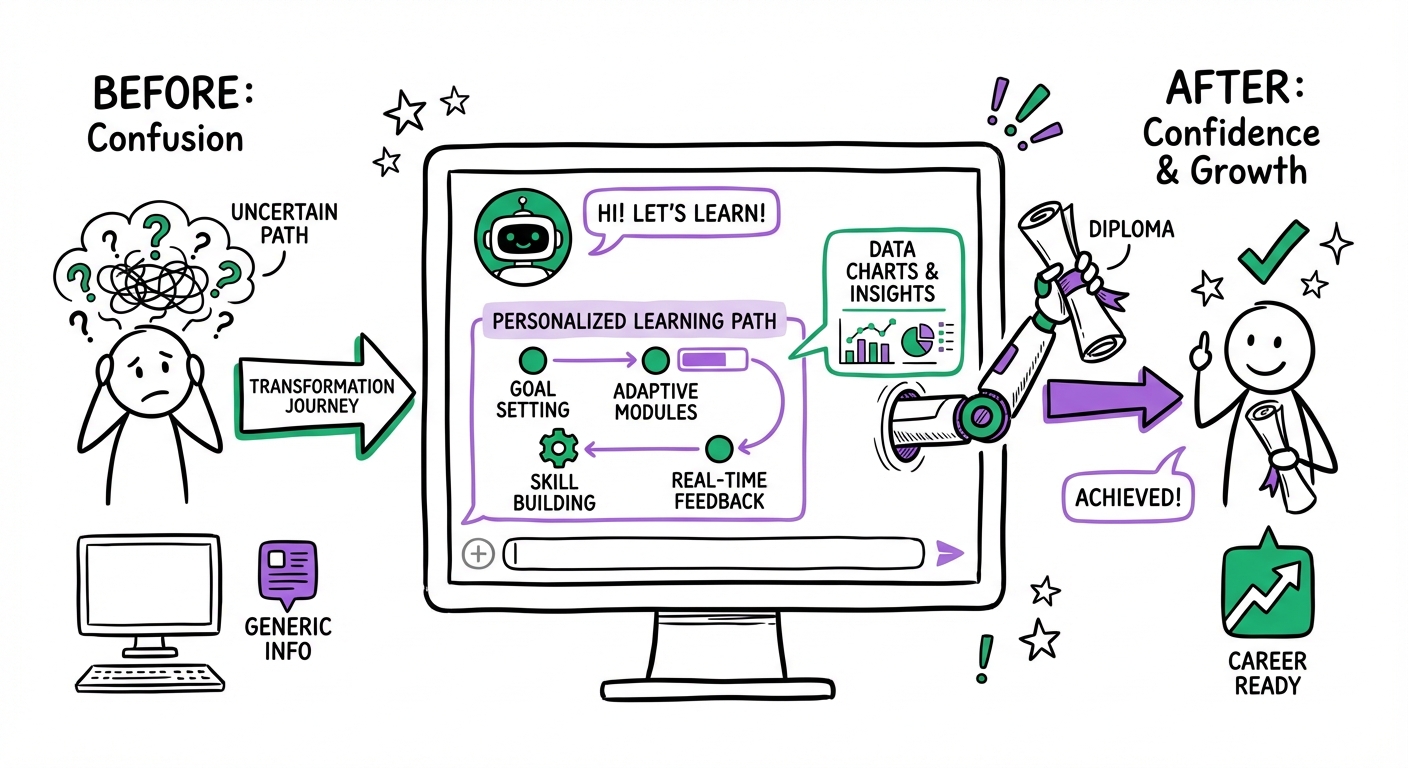
Artificial Intelligence is no longer just a buzzword; it is the engine of modern L&D. By 2025, the focus will shift from simple recommendation engines to Generative AI that creates content in real-time.
Key AI Applications in Training:
- Dynamic Content Generation: AI creating role-play scenarios, quizzes, and summaries instantly based on company documentation.
- AI Tutors & Coaches: 24/7 conversational bots that provide feedback on soft skills and technical queries.
- Predictive Skill Gap Analysis: Algorithms that analyze workflow data to suggest training before a performance dip occurs.
Impact: Early adopters of AI-powered adaptive learning report up to 40% faster skill acquisition. The technology enables L&D teams to scale personalized coaching—previously a luxury for executives—to the entire workforce.
2. The Skills-Based Organization & Talent Marketplaces
The shift from role-based to skills-based learning is the most structural change in HR. By 2025, successful companies will deconstruct jobs into tasks and skills, allowing for a more fluid allocation of talent.
Components of Skills-Based Architecture:
- Internal Talent Marketplaces: Platforms that match employees to projects (gigs) based on their skills, not just their job titles.
- Granular Skill Taxonomies: Breaking down "Project Management" into specific competencies like "Agile Scoping" or "Stakeholder Negotiation."
- Verified Digital Credentials: Blockchain-backed badges that prove skill mastery.
This approach fosters agility. When a business need arises, the organization can quickly identify who has the necessary skills, regardless of their department.
3. Hybrid and Flexible Delivery Models
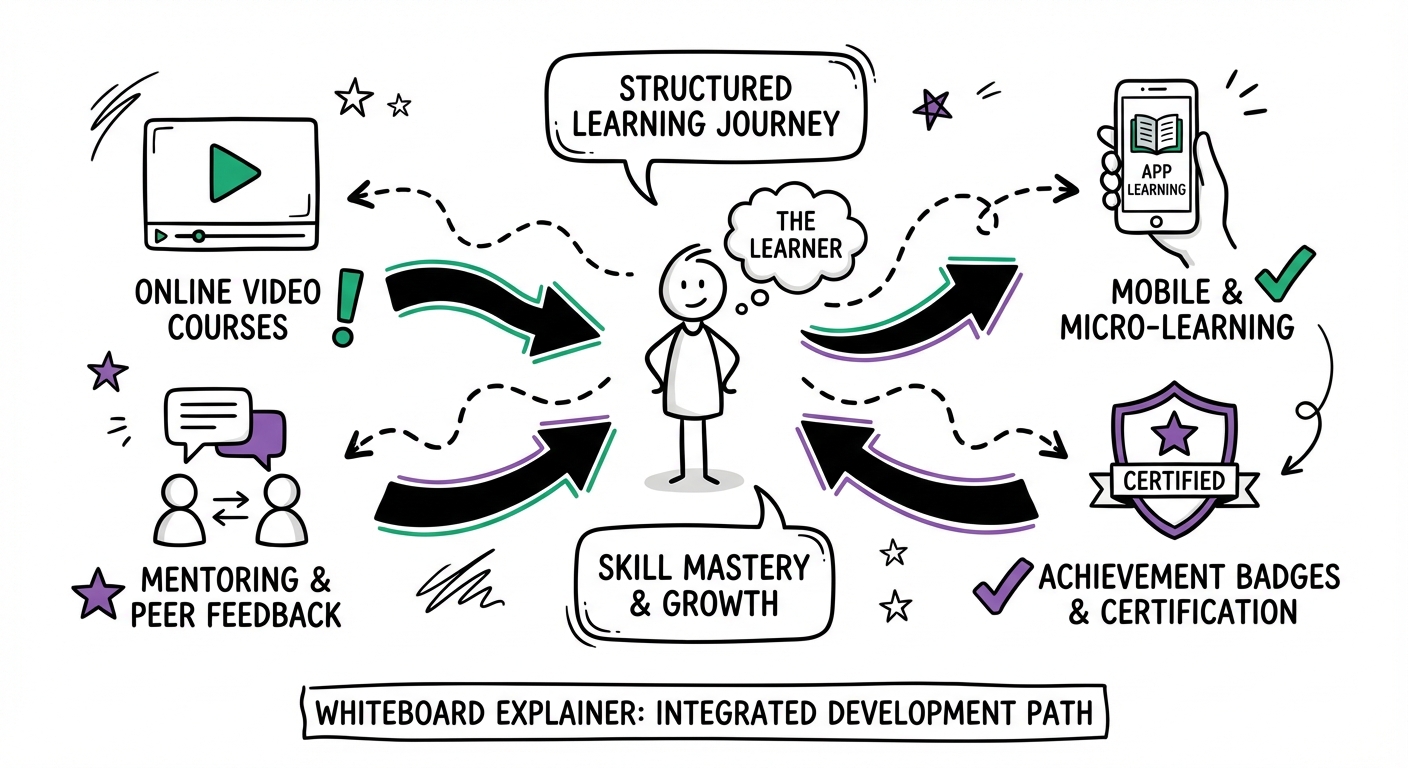
The "new normal" is simply "normal." The future lies in blended learning 2.0—seamless integration across modalities where the modality matches the learning objective.
| Delivery Method | Best Use Case | 2025 Evolution | Cost Efficiency |
|---|---|---|---|
| In-Person | Leadership, culture building, high-stakes negotiation | Reserved for high-value, emotional connection moments | Low |
| Virtual Live | Expert-led sessions, global cohorts | Enhanced by AI summaries and sentiment analysis | Medium |
| Microlearning | Just-in-time support, reinforcement | Integrated directly into workflow apps (Slack/Teams) | High |
| Spatial (VR/AR) | Safety, technical skills, empathy training | Lighter headsets, pass-through mixed reality | Medium |
4. Spatial Computing and Immersive Learning (VR/AR)
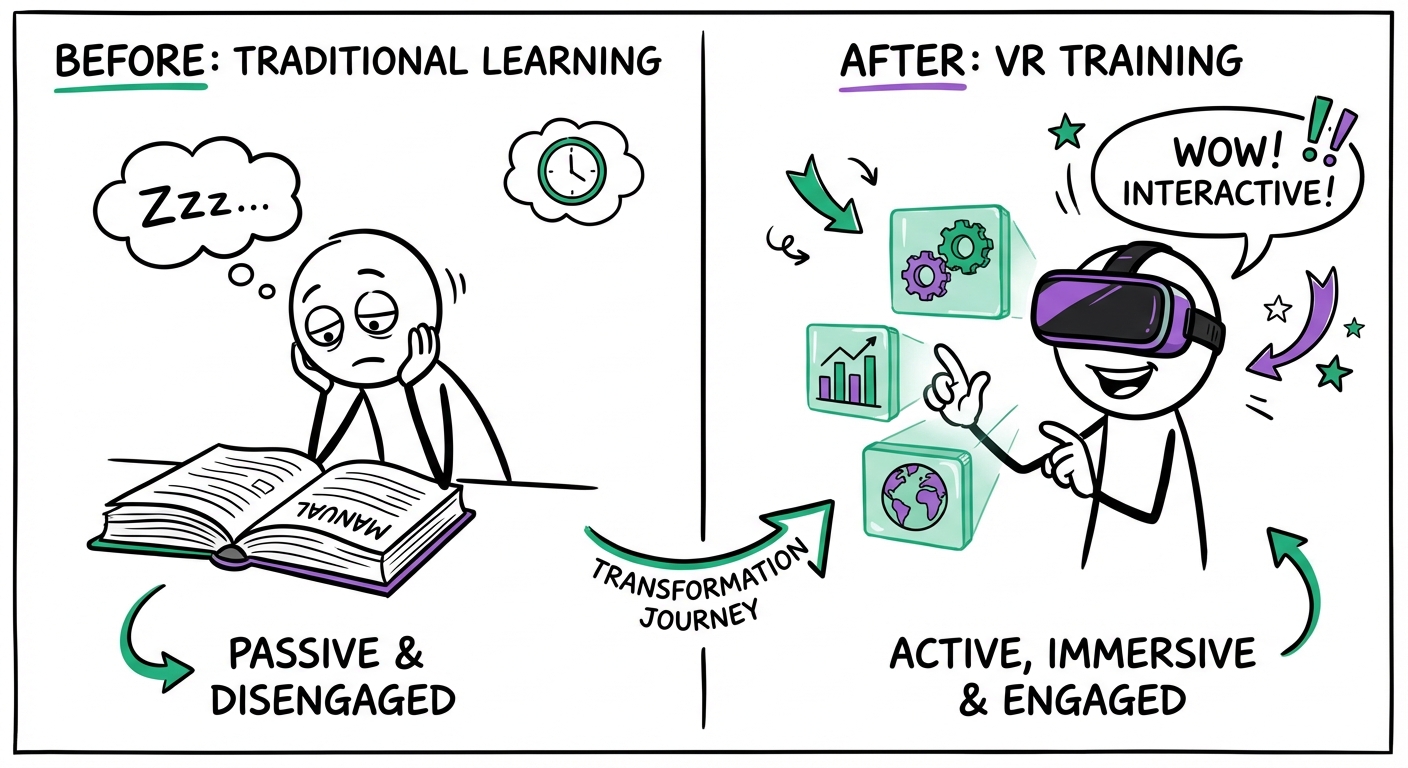
With the maturation of hardware (like Apple Vision Pro and Meta Quest), Virtual Reality (VR) and Augmented Reality (AR) are moving from experimental pilots to standard onboarding tools. This is often referred to as Spatial Computing.
Top Use Cases:
- High-Risk Simulations: Manufacturing safety, medical procedures, and emergency response.
- Soft Skills Dojo: Practicing difficult conversations with AI avatars in a realistic virtual office.
- Remote Collaboration: 3D product design reviews in shared virtual spaces.
The Data: PwC studies have shown that VR learners can be 4x faster to train than classroom learners and are 275% more confident to apply skills learned after training.
5. Data-Driven Learning Analytics (L&D as a Science)
In 2025, "completion rates" will be a vanity metric. L&D leaders will leverage advanced analytics to prove Return on Expectations (ROE).
Key Analytics Metrics:
- Time-to-Proficiency: How fast does a new hire reach full productivity?
- Skill-to-Performance Correlation: Does completing the sales training actually increase quota attainment?
- Learning Velocity: The speed at which the organization can upskill for a new market shift.
6. Learning in the Flow of Work (LIFOW)
The destination LMS is fading. By 2025, learning will be embedded into the tools employees use daily. If a salesperson is in a CRM, the training on "closing deals" appears right there. This reduces friction and context-switching, making learning a natural part of the daily workflow.
7. Employee-Centric & Social Learning
Recognizing that peers often learn best from peers, organizations are formalizing social learning.
- User-Generated Content (UGC): Allowing subject matter experts to easily record and share quick tips.
- Cohort-Based Learning: Grouping learners to progress through courses together, fostering accountability and networking.
Industry-Specific Adaptations
- Technology: Focus on rapid upskilling for Generative AI coding assistants and cybersecurity.
- Healthcare: Interprofessional education using VR simulations for patient safety.
- Manufacturing: AR smart glasses for "hands-free" maintenance guidance.
- Financial Services: Scenario-based training for ethical decision-making and regulatory changes.
Implementation Strategies for L&D Leaders
Building a Future-Ready L&D Team
Success in 2025 requires L&D teams to evolve from "order takers" to strategic consultants. Essential new competencies include:
- Learning Engineering: Understanding the architecture of learning ecosystems.
- Data Analytics: The ability to interpret performance data.
- Product Management: Treating internal training programs as products with lifecycles.
Pro Tip: Many organizations partner with specialized platforms like Learnexus to access expert instructional designers who possess these niche skills on-demand.
Technology Infrastructure Planning
Your tech stack must be integrated. An LMS alone is insufficient. You need a Learning Experience Platform (LXP) that sits on top of the LMS to provide that Netflix-style, personalized user interface, integrated with a Learning Record Store (LRS) to track data from all sources.
Measuring Success and ROI
Demonstrating return on investment is crucial for budget defense.
The ROI Formula:
ROI = ((Monetary Value of Benefits - Training Costs) / Training Costs) × 100
Modern KPIs:
- Engagement: >4.5/5 satisfaction score.
- Retention: Knowledge retention checks at 30, 60, and 90 days.
- Business Impact: Revenue per employee, reduction in support tickets, or decrease in safety incidents.
Challenges and Solutions
| Challenge | Strategic Solution |
|---|---|
| Budget Constraints | Focus on high-impact, low-cost microlearning first. Use pilot data to unlock larger budgets. |
| Tech Fatigue | Ensure new tools integrate with existing logins (SSO) and workflows. Don't add "another login." |
| Measuring Soft Skills | Use AI-driven role-play assessments and 360-degree feedback tools for quantifiable data. |
The Role of External Partnerships
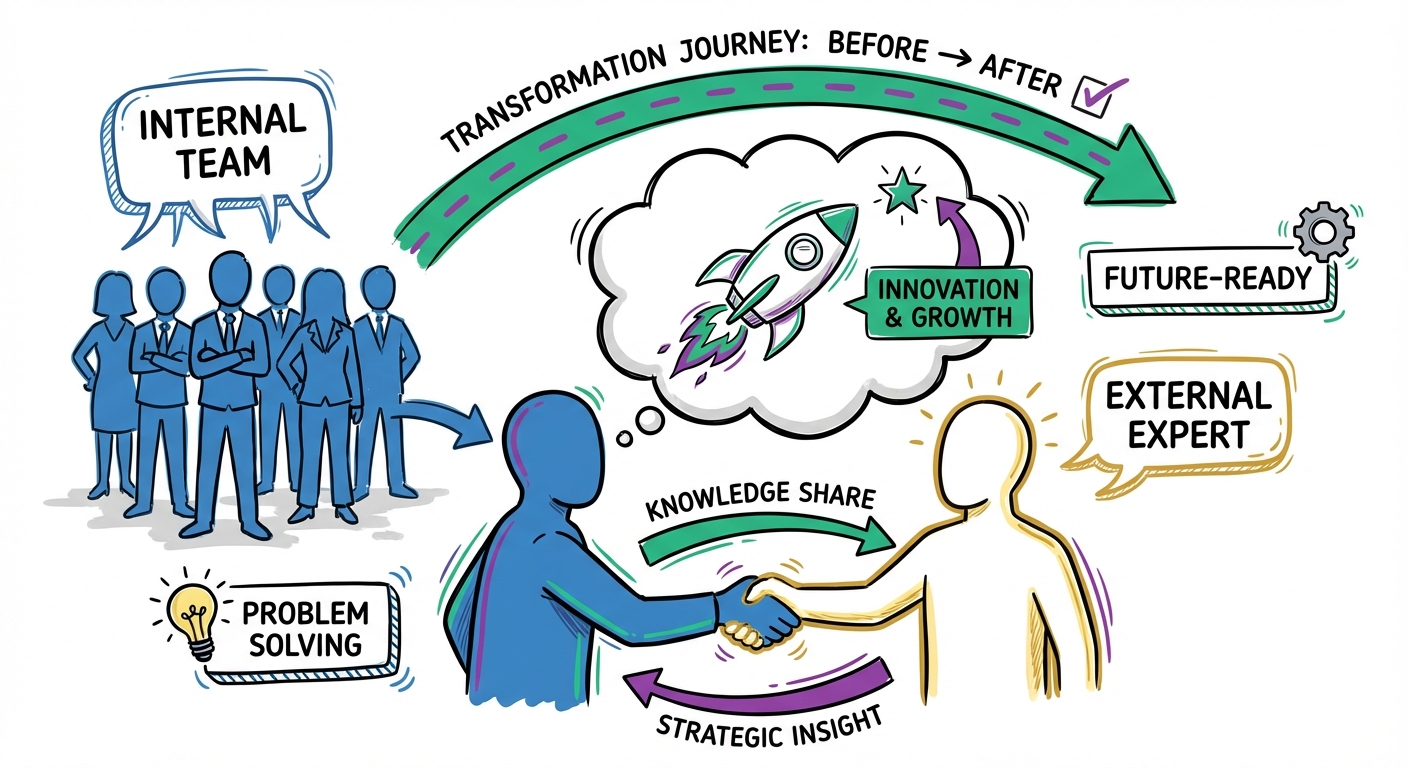
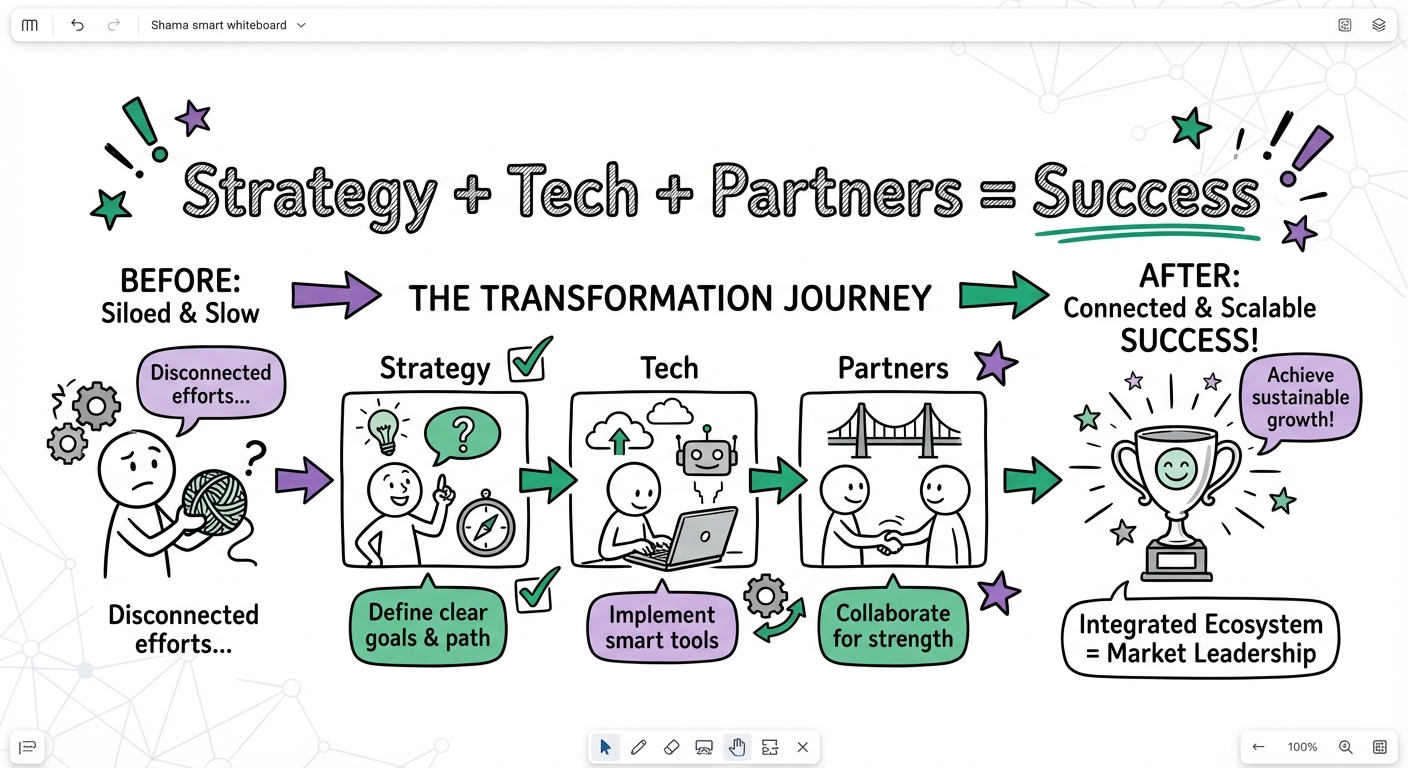
The pace of change in 2025 is too fast for any single internal team to master every trend. Platforms like Learnexus provide access to a marketplace of vetted L&D talent. This allows organizations to bring in a VR specialist for one project and an AI-curriculum designer for the next, ensuring agility and cost-effectiveness.
Conclusion
The corporate training landscape of 2025 will be characterized by personalization, integration, and attribution. L&D leaders who embrace these trends—moving from content creators to ecosystem architects—will position their organizations for success.
The journey toward future-ready corporate training requires a fundamental shift in mindset: Learning is not an event; it is a continuous, data-driven strategy that fuels business performance.
Frequently Asked Questions
Q: How can small organizations with limited budgets implement AI? A: Start small. Use free or low-cost Generative AI tools to help draft training materials or quizzes. Many modern LMS platforms are already building AI features into their existing subscription tiers.
Q: What is the most important trend for L&D leaders to focus on first? A: Data-driven analytics. Without measuring your current baseline, you cannot prove the value of any new technology you implement.
Q: Will AI replace L&D professionals? A: No, but L&D professionals who use AI will replace those who don't. The role will shift toward strategy, human connection, and program management rather than manual content creation.
Q: How do I convince leadership to invest in VR training? A: Focus on safety and speed. Show data on how VR reduces training time (getting employees back to work faster) and eliminates the risk of training in dangerous real-world environments.