Best Websites to Hire Instructional Designers - Complete Guide 2025
TL;DR: Finding skilled instructional designers requires the right platform. This comprehensive guide reviews the top 10 websites for hiring IDs in 2025. Learnexus leads for specialized L&D talent and speed, Upwork is best for broad freelance access, and LinkedIn remains the top choice for full-time, permanent hires.
Introduction: The Instructional Design Talent Challenge
The demand for instructional designers has surged significantly as organizations prioritize employee development and digital learning transformation. Yet, a majority of L&D leaders report difficulty finding qualified instructional design talent with the right mix of pedagogical expertise, technology skills, and industry knowledge.
Whether you're building a corporate training program, developing compliance courses, or creating customer education content, hiring the right instructional designer can make or break your project. The challenge? Instructional designers aren't one-size-fits-all. You need someone who understands adult learning theory, your industry's nuances, and the specific authoring tools in your tech stack.
This definitive guide examines the 10 best platforms for hiring instructional designers in 2025, evaluating each on talent quality, vetting processes, pricing transparency, speed to hire, and specialization in L&D. We've analyzed hiring experiences, interviewed L&D professionals, and tested these platforms firsthand to bring you actionable insights.
How We Evaluated These Platforms
To ensure this guide provides genuine value, we established clear evaluation criteria based on what matters most to L&D professionals:
- Talent Quality & Vetting (30%): Do they pre-screen for instructional design expertise? What's the acceptance rate? Do they verify portfolios and certifications?
- L&D Specialization (25%): Is the platform built specifically for learning and development, or is it a general marketplace? Do they understand ADDIE, SAM, Bloom's Taxonomy, and xAPI?
- Speed to Hire (15%): How quickly can you go from posting a need to starting work? What's the average time to the first qualified candidate?
- Pricing Transparency (15%): Are rates clearly displayed? Are there hidden fees? What's the total cost of hiring?
- Platform Features (10%): Project management tools, contract templates, payment protection, communication features.
- Support & Success Rate (5%): Do they offer hiring assistance? What percentage of projects complete successfully?
The Top 10 Platforms for Hiring Instructional Designers in 2025
1. Learnexus - Best Overall for L&D Professionals
The Verdict: Learnexus stands out as the premier marketplace built exclusively for instructional design and L&D talent, offering pre-vetted specialists who understand corporate training inside and out.
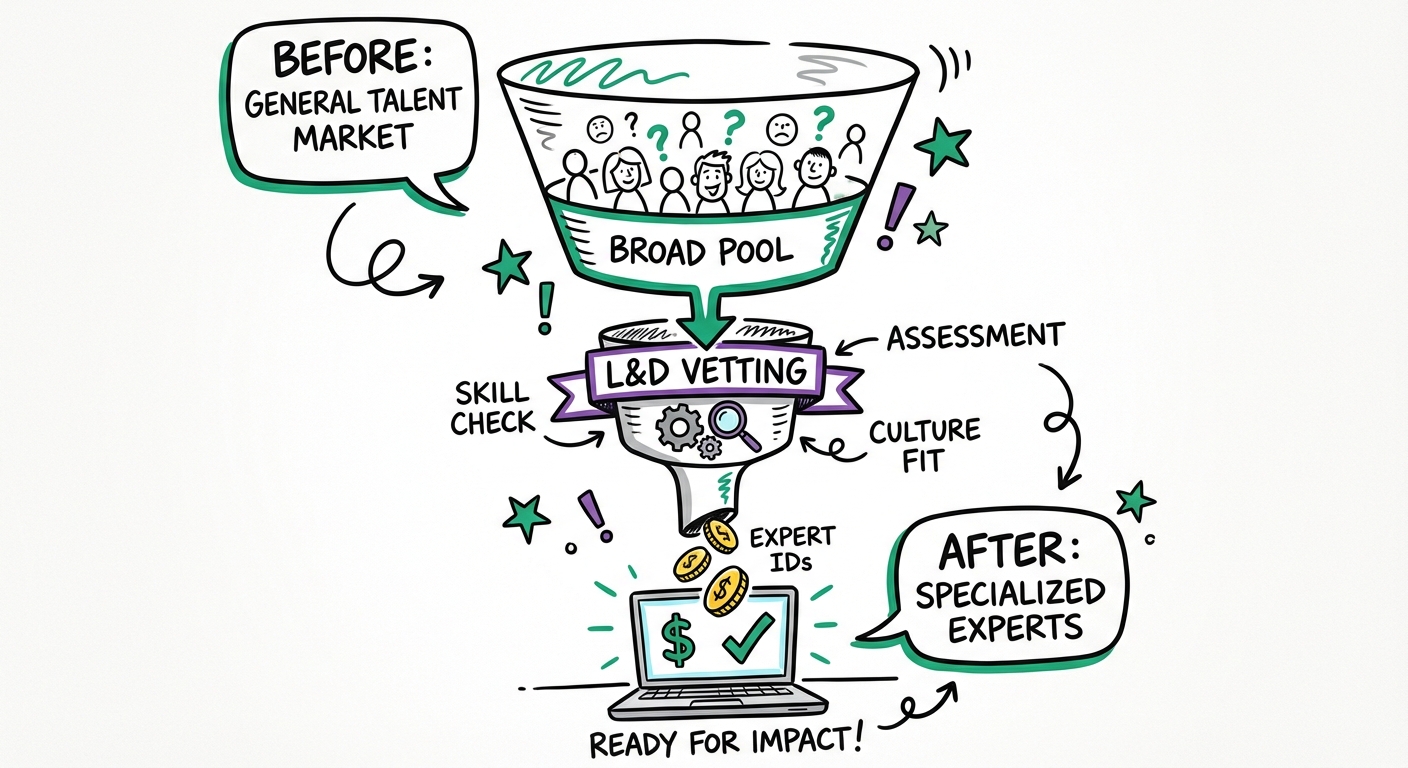
What Makes It Special: Unlike general freelance platforms where you're competing with thousands of unrelated job posts, Learnexus focuses solely on learning and development. Every instructional designer on the platform has been vetted for their understanding of learning science, experience with authoring tools, and track record delivering training projects.
Key Features:
- Pre-vetted L&D specialists: Only ~8% of applicants are accepted, ensuring top-tier talent.
- Industry-specific matching: Find IDs with experience in your sector (healthcare, finance, tech, manufacturing).
- Tool expertise filtering: Search by specific authoring tools (Articulate Storyline, Adobe Captivate, Rise 360, Camtasia).
- Flexible engagements: Hire for single courses, staff augmentation, or long-term partnerships.
- Dedicated support: L&D experts help scope projects and match you with ideal candidates.
- Fast matching: Average time to first qualified candidate: 48 hours.
- Portfolio verification: All work samples are verified as the designer's actual work.
Pricing: Instructional designers on Learnexus typically charge $65-$150/hour depending on experience and specialization. There are no platform fees for clients—you pay only the designer's rate. Project-based pricing is available for defined scope work.
Best For:
- Corporate L&D teams needing specialized training development.
- Organizations requiring specific authoring tool expertise.
- Companies wanting pre-vetted talent without lengthy screening processes.
- Projects requiring understanding of compliance training, leadership development, or technical training.
Pros: ✅ Only platform exclusively for L&D and instructional design ✅ Rigorous vetting ensures high-quality talent ✅ Industry and tool-specific matching saves screening time ✅ No client fees—transparent pricing ✅ Designers understand corporate training context and constraints
Cons: ❌ Smaller talent pool than generalist platforms (quality over quantity) ❌ Premium pricing compared to offshore generalist freelancers ❌ Focused primarily on North American talent
Real User Experience: "We needed an instructional designer who understood pharmaceutical compliance training and had Articulate Storyline expertise. Learnexus matched us with three qualified candidates within 24 hours. The designer we hired had actually worked in pharma before—she understood our regulatory constraints without explanation." — Sarah M., Learning Director, Pharmaceutical Company
2. Upwork - Best for Freelance Flexibility
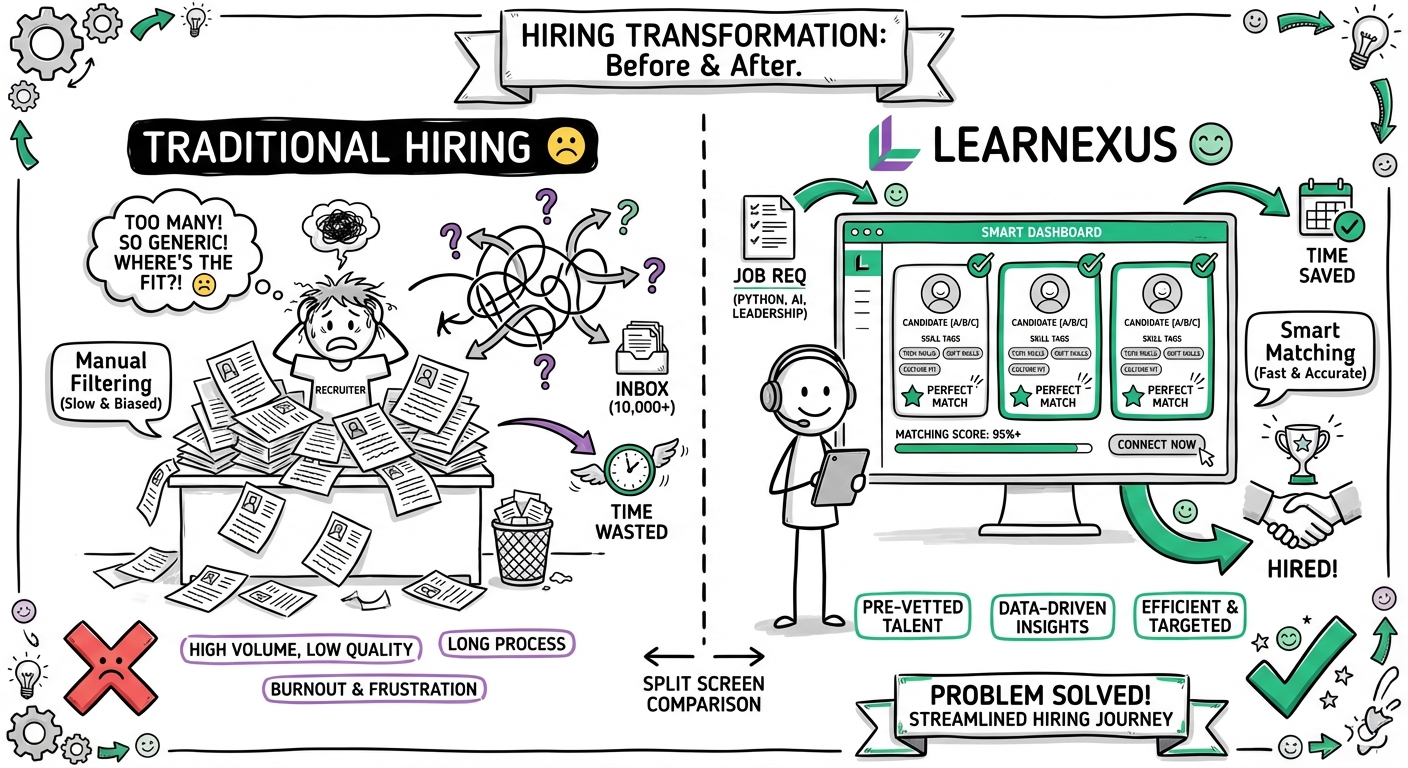
The Verdict: Upwork offers the largest pool of freelance instructional designers with flexible engagement options, though you'll need to invest significant time in screening to find L&D-specialized talent.
What Makes It Special: As the world's largest freelance marketplace, Upwork provides access to thousands of instructional designers across all experience levels and price points. The platform's robust search filters, work history transparency, and built-in project management tools make it a solid choice for organizations comfortable managing the vetting process themselves.
Key Features:
- Massive talent pool: 10,000+ instructional designers globally.
- Detailed profiles: View work history, client reviews, portfolio samples, and skills tests.
- Flexible contracts: Hourly or fixed-price projects.
- Built-in time tracking: Automatic screenshots and activity monitoring for hourly work.
- Payment protection: Escrow system protects both parties.
- Talent badges: "Top Rated" and "Rising Talent" designations help identify quality.
Pricing: Rates range dramatically from $15/hour (offshore, entry-level) to $150+/hour (US-based experts). Upwork charges clients a Marketplace Fee (typically 5%) on payments, plus a one-time contract initiation fee (up to $9.95). Expect to pay $50-$85/hour for mid-level US-based instructional designers.
Best For:
- Organizations with clear project requirements who can evaluate portfolios.
- Budget-conscious projects willing to consider global talent.
- Teams needing quick access to many candidates.
- One-off projects rather than ongoing partnerships.
Pros: ✅ Largest talent pool with diverse experience levels ✅ Competitive pricing, especially for offshore talent ✅ Transparent work history and client reviews ✅ Robust platform features (time tracking, messaging, contracts)
Cons: ❌ Requires significant time to screen candidates ❌ Quality varies dramatically—many generalists claim ID expertise ❌ Not specialized for L&D (competing with web design, writing, etc.) ❌ Client service fees add to costs
Pro Tip: When hiring on Upwork, require candidates to answer specific questions about learning theory, your authoring tools, and your industry. Ask for work samples that match your project type exactly.
3. LinkedIn - Best for Full-Time Hires
The Verdict: LinkedIn remains the gold standard for recruiting full-time instructional designers, offering access to passive candidates and detailed professional backgrounds.
What Makes It Special: LinkedIn's 900+ million professionals include thousands of instructional designers, many of whom aren't actively job hunting but are open to the right opportunity. The platform's professional focus means you can evaluate candidates' full career trajectories, recommendations, certifications, and network connections.
Key Features:
- Advanced search filters: Find IDs by location, experience level, tools, industry, and education.
- LinkedIn Recruiter: Premium tool for serious hiring with InMail credits and advanced search.
- Passive candidate access: Reach people not actively job hunting.
- Professional context: See full work history, recommendations, and shared connections.
- Skills assessments: LinkedIn Learning assessments verify tool proficiency.
Pricing:
- Recruiter Lite: ~$170/month.
- Corporate Recruiter: ~$835+/month.
- Job postings: Dynamic pricing model (pay-per-click or flat fee), often starting around $495 for decent visibility.
Best For:
- Full-time instructional designer positions.
- Senior or leadership L&D roles.
- Organizations building in-house teams.
- Roles requiring specific certifications or advanced degrees.
Pros: ✅ Access to passive candidates with stable employment ✅ Detailed professional backgrounds and recommendations ✅ Can evaluate cultural fit through profiles and content ✅ Good for senior and specialized roles
Cons: ❌ Expensive for contract or project-based needs ❌ Time-intensive recruiting process ❌ Long time-to-hire (typically 6-12 weeks) ❌ Candidates expect full-time benefits and salaries
4. Toptal - Best for Top 3% Talent
The Verdict: Toptal's rigorous screening process ensures access to elite instructional designers, though premium pricing reflects the quality.
What Makes It Special: Toptal claims to accept only the top 3% of applicants through a multi-stage vetting process including skills assessments, live screening, and test projects. For organizations where quality trumps cost and project failure isn't an option, Toptal provides peace of mind.
Key Features:
- Rigorous vetting: Multi-stage screening process with 3% acceptance rate.
- Talent matching: Dedicated matcher finds candidates based on detailed requirements.
- Trial period: Risk-free two-week trial with any designer.
- Replacement guarantee: If it's not working, they'll find a replacement.
Pricing: Hourly rates typically $100-$200+ for instructional designers. Toptal charges a deposit (typically $500) that's credited toward your first invoice. No platform fees beyond the designer's rate, but rates are premium.
Best For:
- Mission-critical training projects.
- Organizations with limited internal L&D expertise to evaluate candidates.
- Complex projects requiring senior-level strategic thinking.
- Companies wanting minimal hiring risk.
Pros: ✅ Extremely rigorous vetting ensures top talent ✅ Dedicated matching service saves screening time ✅ Trial period reduces hiring risk ✅ Designers are experienced professionals, not beginners
Cons: ❌ Premium pricing—among the most expensive options ❌ Smaller talent pool due to selective acceptance ❌ Deposit required upfront ❌ Less flexibility in rate negotiation
5. Fiverr Pro - Best for Quick, Defined Projects
The Verdict: Fiverr Pro's vetted instructional designers offer packaged services ideal for well-defined, smaller-scope projects at competitive rates.
What Makes It Special: Fiverr Pro represents the platform's answer to quality concerns, featuring hand-vetted professionals who offer packaged services. For organizations with clearly defined needs—"create a 20-minute compliance course in Articulate Rise"—Fiverr Pro's fixed-price packages provide clarity and speed.
Key Features:
- Vetted professionals: Pro badge indicates manual vetting by Fiverr.
- Packaged services: Clear deliverables and pricing (e.g., "10-minute eLearning module: $500").
- Fast turnaround: Many designers offer 3-7 day delivery.
- Milestone payments: Pay as deliverables are completed.
Pricing: Fiverr Pro instructional designers typically charge $300-$2,000 per package depending on scope. Fiverr charges a 5.5% service fee on purchases (plus a small small order fee if under $50).
Best For:
- Well-defined, smaller projects (single courses, modules, storyboards).
- Organizations with tight budgets.
- Quick turnaround needs.
- Teams who know exactly what they want.
Pros: ✅ Clear pricing and deliverables upfront ✅ Fast turnaround times ✅ Easy to compare options and portfolios ✅ Milestone payments reduce risk
Cons: ❌ Package model doesn't fit complex or evolving projects ❌ Limited strategic consultation or needs analysis ❌ Communication can be transactional ❌ May lack deep corporate training experience
6. Catalant - Best for Strategic L&D Consulting
The Verdict: Catalant connects organizations with senior L&D consultants and instructional design strategists for high-level projects requiring business acumen alongside ID expertise.
What Makes It Special: Catalant focuses on experienced consultants from top firms and Fortune 500 backgrounds. Their instructional designers typically bring 10+ years of experience and strategic thinking, making them ideal for learning strategy, needs analysis, and program design rather than just course development.
Key Features:
- Senior-level talent: Average 15+ years of experience.
- Strategic focus: Consultants who can shape L&D strategy, not just execute.
- Project scoping support: Catalant team helps define project requirements.
- Business context: Consultants understand ROI, stakeholder management, and organizational change.
Pricing: Rates typically $150-$300/hour for senior L&D consultants. Project minimums often apply. Catalant charges a platform fee (percentage varies by project size).
Best For:
- Learning strategy development.
- Large-scale L&D transformation projects.
- Interim L&D leadership roles.
- Complex change management initiatives with learning components.
Pros: ✅ Access to senior, strategic L&D talent ✅ Consultants bring business acumen and change management skills ✅ Good for high-level strategy and program design ✅ Curated matching saves time
Cons: ❌ Premium pricing—among the most expensive options ❌ Overkill for tactical course development ❌ Project minimums may not suit smaller needs
7. Guru - Best for Transparent Pricing
The Verdict: Guru's SafePay system and transparent pricing model make it a solid choice for organizations prioritizing budget predictability and payment protection.
What Makes It Special: Guru differentiates itself with SafePay, an escrow system that releases payment only when you approve work. The platform also emphasizes transparent pricing, with freelancers displaying their rates prominently.
Key Features:
- SafePay escrow: Funds held until work is approved.
- Transparent rates: Freelancers display hourly or project rates upfront.
- Workroom: Collaboration space for files, communication, and feedback.
- Invoice management: Streamlined payment processing.
Pricing: Instructional designer rates range from $25-$120/hour. Guru charges a 2.9% handling fee on each invoice paid.
Best For:
- Budget-conscious organizations.
- Projects requiring payment protection.
- Mid-sized projects ($2,000-$15,000).
- Organizations comfortable with self-service hiring.
Pros: ✅ SafePay provides payment protection ✅ Transparent pricing—no surprises ✅ Workroom facilitates collaboration ✅ Lower fees than some competitors
Cons: ❌ Smaller talent pool than Upwork or Fiverr ❌ Less L&D specialization ❌ Quality varies—requires screening
8. We Work Remotely - Best for Remote-First Teams
The Verdict: We Work Remotely attracts instructional designers who prioritize remote work and asynchronous collaboration, making it ideal for distributed teams.
What Makes It Special: As one of the largest remote job boards, We Work Remotely attracts talent specifically seeking remote opportunities. The instructional designers here are typically experienced with remote collaboration tools, asynchronous communication, and self-directed work—critical for distributed L&D teams.
Key Features:
- Remote-focused talent: Candidates specifically seeking remote work.
- Job posting model: Post openings and receive applications.
- Category-specific: Dedicated section for education and training roles.
- Global reach: Attract international talent.
Pricing: $299 per job posting (standard). Upgrades available for email blasts and social highlighting. No additional hiring fees.
Best For:
- Fully remote or distributed L&D teams.
- Organizations hiring across time zones.
- Contract-to-hire arrangements.
- Companies with strong remote work culture.
Pros: ✅ Attracts remote-experienced talent ✅ Simple, transparent pricing ✅ Good for both full-time and contract roles ✅ No per-hire fees
Cons: ❌ Job posting model requires screening applications ❌ No vetting or matching services ❌ Pay upfront regardless of hire success
9. Instructional Design Central (ID Central) - Best for Community-Sourced Talent
The Verdict: ID Central's job board connects you directly with a dedicated instructional design community, offering access to engaged professionals.
What Makes It Special: ID Central is a community hub for instructional designers, featuring forums, resources, and a job board. Posting here reaches IDs who are actively engaged in professional development and community participation—often a signal of commitment to the craft.
Key Features:
- Community engagement: Reach IDs active in professional development.
- Direct applications: Candidates apply directly to you.
- Resource library: Indicates candidates' commitment to learning.
Pricing: $275 for a 30-day job posting.
Best For:
- Organizations with HR capacity to screen applications.
- Full-time or long-term contract positions.
- Companies wanting to reach engaged ID professionals.
Pros: ✅ Reaches engaged, community-active IDs ✅ Direct communication with candidates ✅ Community reputation can indicate quality
Cons: ❌ No vetting or screening services ❌ Requires significant time to review applications ❌ Smaller reach than major platforms ❌ No platform features (payment, contracts, project management)
10. ATD (Association for Talent Development) Job Bank - Best for Certified Professionals
The Verdict: ATD's job bank connects you with L&D professionals who hold industry certifications and are committed to professional development, though it's best suited for full-time roles.
What Makes It Special: ATD is the world's largest professional association for talent development. Their job bank attracts instructional designers and L&D professionals who invest in certifications (CPTD, APTD) and ongoing learning. This signals commitment to the profession and adherence to industry standards.
Key Features:
- Certified professionals: Many candidates hold ATD certifications.
- Professional development focus: Candidates committed to L&D as a career.
- Industry standards: Familiarity with ATD competency model.
- Resume database: Search candidate profiles proactively.
Pricing:
- Job postings: $395 for 60-day standard listing, $595 for featured listing.
- Resume database access: $295 for 30-day access.
Best For:
- Full-time L&D positions.
- Organizations valuing certifications and professional development.
- Senior or leadership roles.
Pros: ✅ Reaches certified, committed L&D professionals ✅ Candidates understand industry standards and best practices ✅ Good for senior and strategic roles
Cons: ❌ Best for full-time roles, not freelance/contract ❌ Smaller talent pool than general platforms ❌ Requires screening and interviewing time ❌ Longer time-to-hire than freelance platforms
Platform Comparison Table
| Platform | Best For | Avg. Rate | Vetting | L&D Focus | Time to Hire | Client Fees |
|---|---|---|---|---|---|---|
| Learnexus | L&D specialists | $65-150/hr | Rigorous (8% accepted) | ⭐⭐⭐⭐⭐ Exclusive | 48 hours | None |
| Upwork | Freelance flexibility | $50-85/hr | Self-service | ⭐⭐ General | 3-7 days | 5% + Initiation |
| Full-time hires | $70K-120K salary | Self-service | ⭐⭐⭐ Professional | 6-12 weeks | Recruiter fees | |
| Toptal | Top 3% talent | $100-200/hr | Very rigorous (3% accepted) | ⭐⭐⭐ Consulting | 3-5 days | None (premium rates) |
| Fiverr Pro | Quick projects | $300-2K/project | Moderate | ⭐⭐ General | 1-3 days | 5.5% |
| Catalant | Strategic consulting | $150-300/hr | Rigorous | ⭐⭐⭐⭐ Strategic | 5-10 days | Platform fee varies |
| Guru | Budget-conscious | $45-75/hr | Self-service | ⭐⭐ General | 5-10 days | 2.9% |
| We Work Remotely | Remote teams | Varies | Self-service | ⭐⭐ General | 2-4 weeks | $299/posting |
| ID Central | Community talent | Varies | None | ⭐⭐⭐⭐ Community | 2-4 weeks | $275/posting |
| ATD Job Bank | Certified pros | Varies | None | ⭐⭐⭐⭐⭐ Professional | 4-8 weeks | $395/posting |
How to Choose the Right Platform for Your Needs
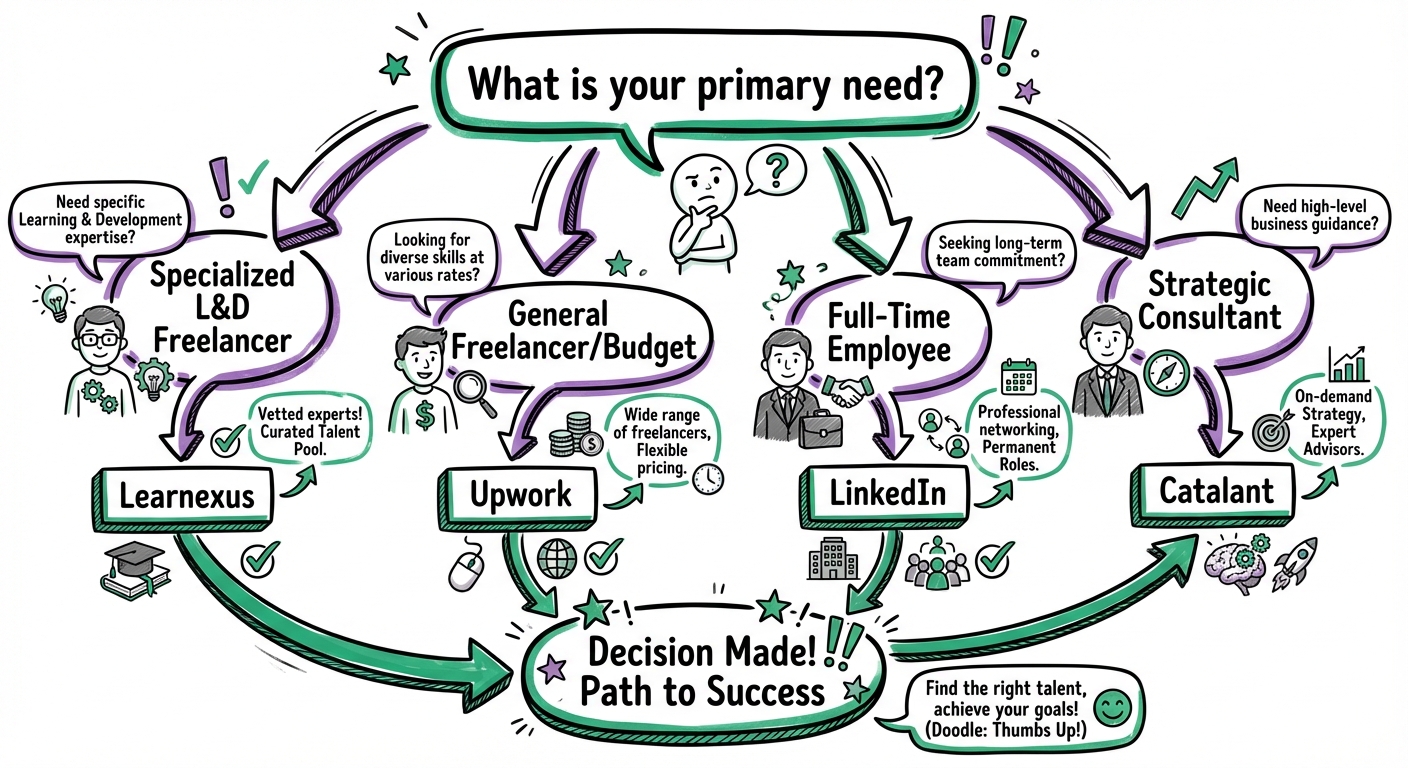
Selecting the optimal platform depends on your specific situation. Here's a decision framework:
- Choose Learnexus if: You need specialized L&D expertise, specific authoring tool skills (Articulate, Captivate), and want pre-vetted talent fast without client fees.
- Choose Upwork if: You have a tight budget, clear requirements, and the time to screen multiple portfolios yourself.
- Choose LinkedIn if: You are hiring for a permanent, full-time role and want to see a candidate's entire professional history.
- Choose Toptal if: You have a high-stakes project with a flexible budget and need a risk-free trial period.
- Choose Fiverr Pro if: You have a small, well-defined deliverable (like a single module) and need it done in under a week.
Red Flags to Watch For When Hiring Instructional Designers
Regardless of which platform you choose, watch for these warning signs:
- Portfolio Red Flags: Generic templates, no variety in project types, or samples that don't match claimed expertise.
- Communication Red Flags: Vague responses to questions about learning theory, unfamiliarity with standard L&D terminology (ADDIE, Bloom's Taxonomy), or promises of unrealistic timelines.
- Experience Red Flags: Claims expertise in every tool, no questions about your learners/context, or a focus solely on aesthetics rather than learning outcomes.
- Process Red Flags: Skips needs analysis, doesn't ask about existing content/branding, or is resistant to clear scope documentation.
Best Practices for Successful Instructional Designer Hiring
1. Define Your Needs Clearly
Before posting, document your project scope, required authoring tools, delivery format (SCORM, xAPI), timeline, budget, and learner audience.
2. Evaluate Beyond the Portfolio
Assess their ability to explain the pedagogical approach behind their work. Ask how they handle constraints and collaborate with SMEs.
3. Start with a Paid Test Project
For significant engagements, invest in a small paid test project ($300-$800) to assess quality, communication, and timeliness before committing to the full scope.
4. Establish Clear Contracts
Ensure your agreement covers scope, deliverables, timeline, revision rounds, intellectual property ownership, and confidentiality.
5. Provide Comprehensive Briefs
Set your instructional designer up for success with:
- Background: Company, industry, and training context.
- Learner profiles: Demographics, prior knowledge, and motivations.
- Learning objectives: Specific, measurable outcomes.
- Content: SME access, existing materials, and reference documents.
- Brand guidelines: Visual standards, tone, and terminology.
- Examples: Links to existing courses or styles you admire to align visual expectations early.
Conclusion
Hiring the right instructional designer is an investment in your organization's growth and efficiency. While generalist platforms like Upwork and Fiverr offer breadth, specialized marketplaces like Learnexus provide the depth of expertise required for modern corporate learning. By aligning your platform choice with your specific project needs—whether that's a quick compliance module or a comprehensive leadership academy—you can find the talent necessary to drive real behavior change in 2025.